Reducing costs and increasing accuracy for an energy and carbon consultancy
Bills, meter data and fuel-card statements are now ingested once into a single record per client, with gaps and anomalies flagged for an analyst to resolve
Growth without headcount
Fourteen additional SECR clients and eleven new ESOS engagements taken on in 2026, without adding headcount.A growing energy and carbon consultancy
Our energy and carbon consulting client is a twelve-person energy and carbon consultancy, working with mid-sized manufacturers, logistics operators and multi-site retailers across the UK. Two of its consultants are registered ESOS Lead Assessors; the rest of the team are energy analysts and carbon accountants. The firm delivers around forty SECR disclosures a year, supports thirty clients through ESOS, and has built a growing carbon strategy practice - SBTi target-setting, net zero roadmaps and Carbon Reduction Plans.

Two Lead Assessors spending their time on data, not judgement
With its ESOS pipeline building and its SECR book expanding, the firm was turning work away because its two Lead Assessors were spending most of their time on data rather than judgement. Hiring another Lead Assessor would have taken a year and still left the underlying process unchanged.
Data work crowding out judgement
Chasing utility bills, reconciling meter exports against invoices, and rebuilding the same consumption dataset in a fresh spreadsheet for each scheme.
The same data, collected twice
A client's SECR data and its ESOS data were collected twice, by different people, in different formats — and the two rarely agreed at the first pass.
A fresh spreadsheet for every engagement
Every new engagement meant a new spreadsheet, and every conversion factor update meant checking dozens of them by hand.
Hiring wouldn't fix the process
Hiring another Lead Assessor would have taken a year and still left the underlying process unchanged.
Starting with SECR, then ESOS, on one platform
[One or two lines introducing the tool — to be completed]
- One record per clientBills, meter data and fuel-card statements are ingested once into a single record per client, with gaps and anomalies flagged for an analyst to resolve.
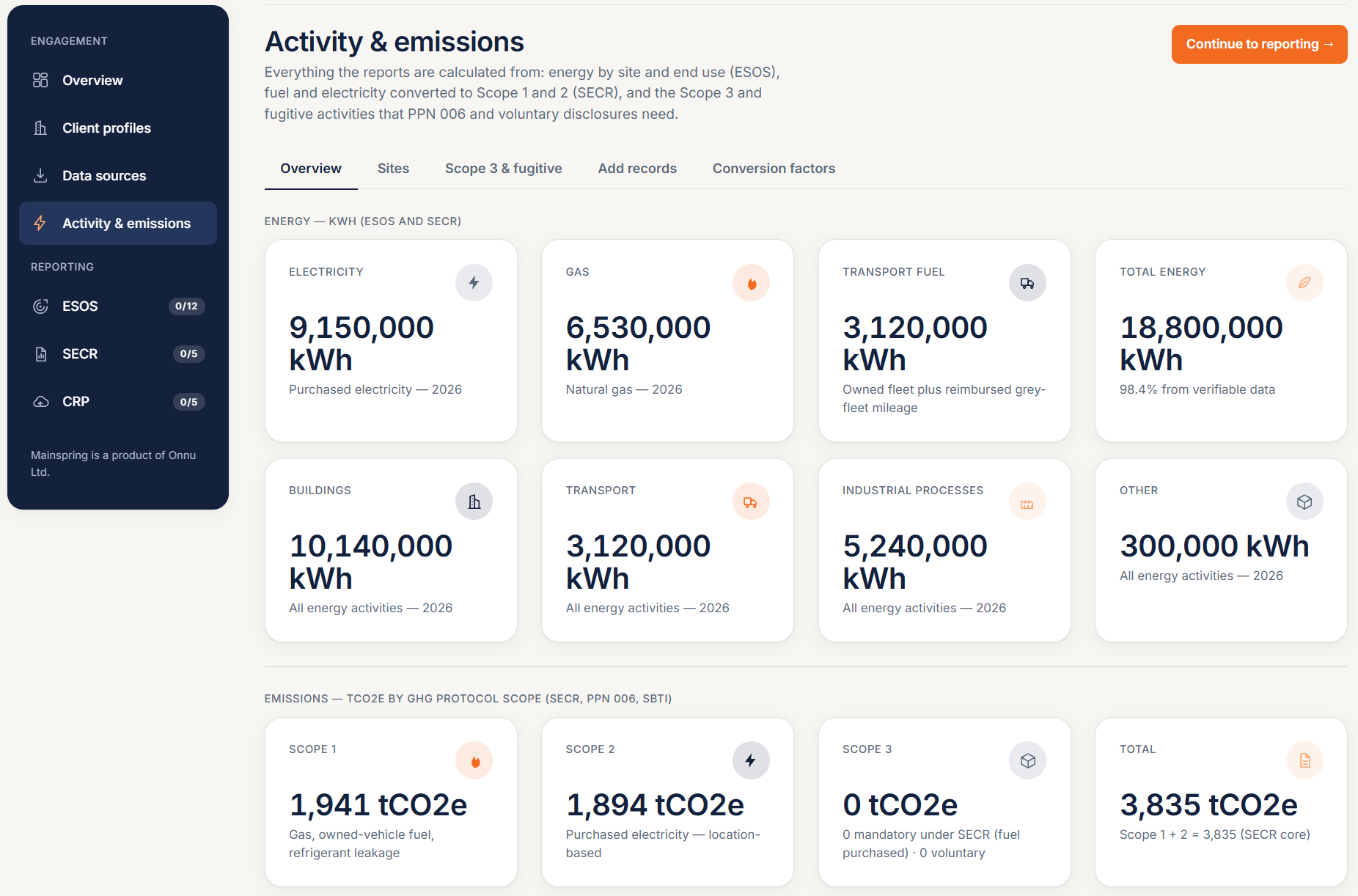
- The SECR view, on versioned factorsFrom that one dataset, Mainspring produces the SECR view — Scope 1 and 2 emissions, intensity ratio, prior-year comparatives — using versioned government conversion factors.
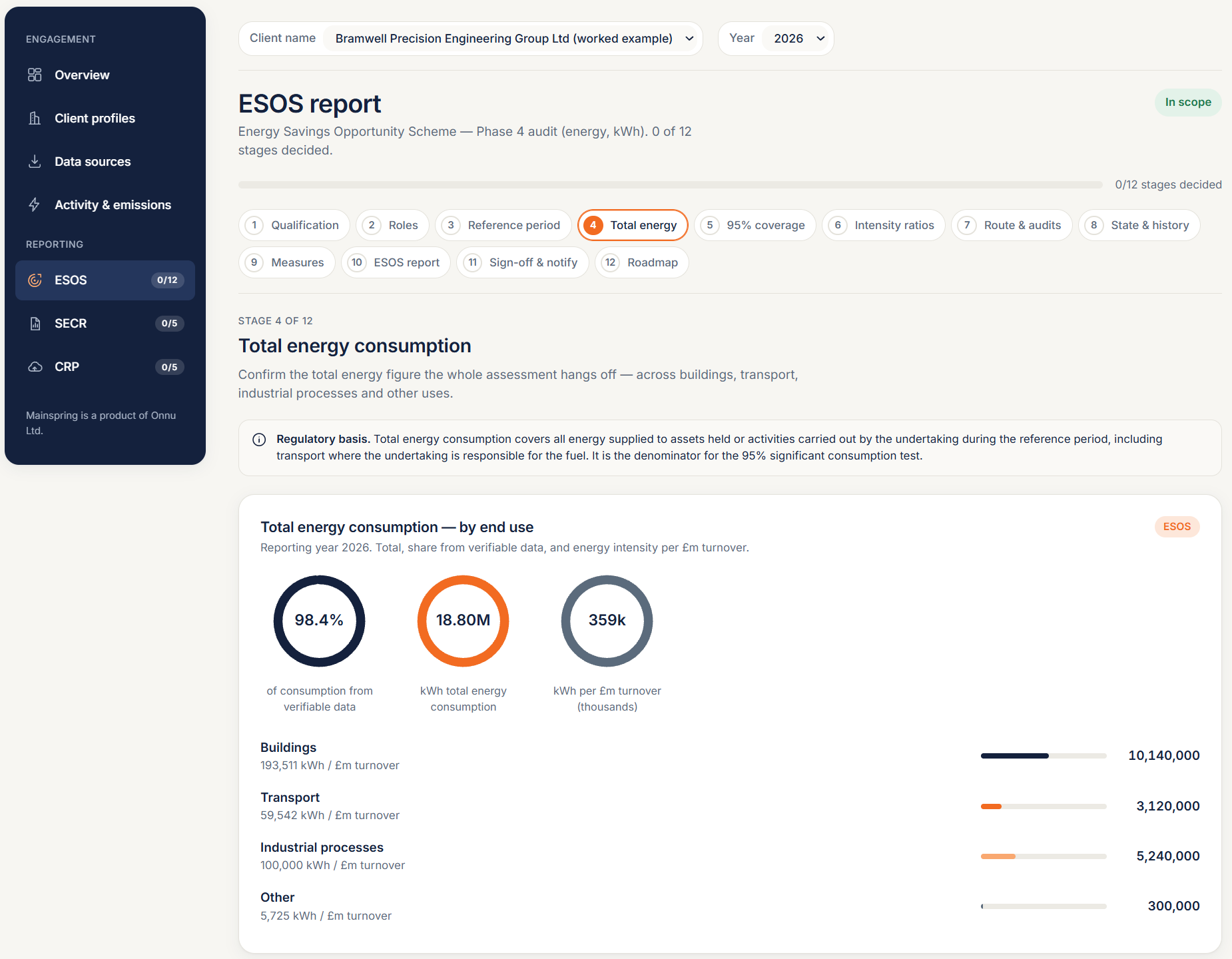
- Draft until a Lead Assessor signs offDraft narratives and savings opportunities are generated for review, and every figure and paragraph carries a draft label until a named Lead Assessor or director marks it reviewed. Reports are assembled under the client's own branding.
From data assembly to review and sign-off
The platform changed both how quickly work gets done and how much of it the practice can take on:
Book a free opportunity review.
A focused conversation about how your business runs and where AI could help — and where it would not.