Using machine data to ensure compliance at an industrial plant
Making carbon audits and carbon reporting automated, with little-to-no time needed to produce reports.
Cashflow positve
Reliable compliant data means more regular carbon credit issuance, bringing cash into the business more frequently with less delay.Industrial pyrolysis plants, streaming live telemetry
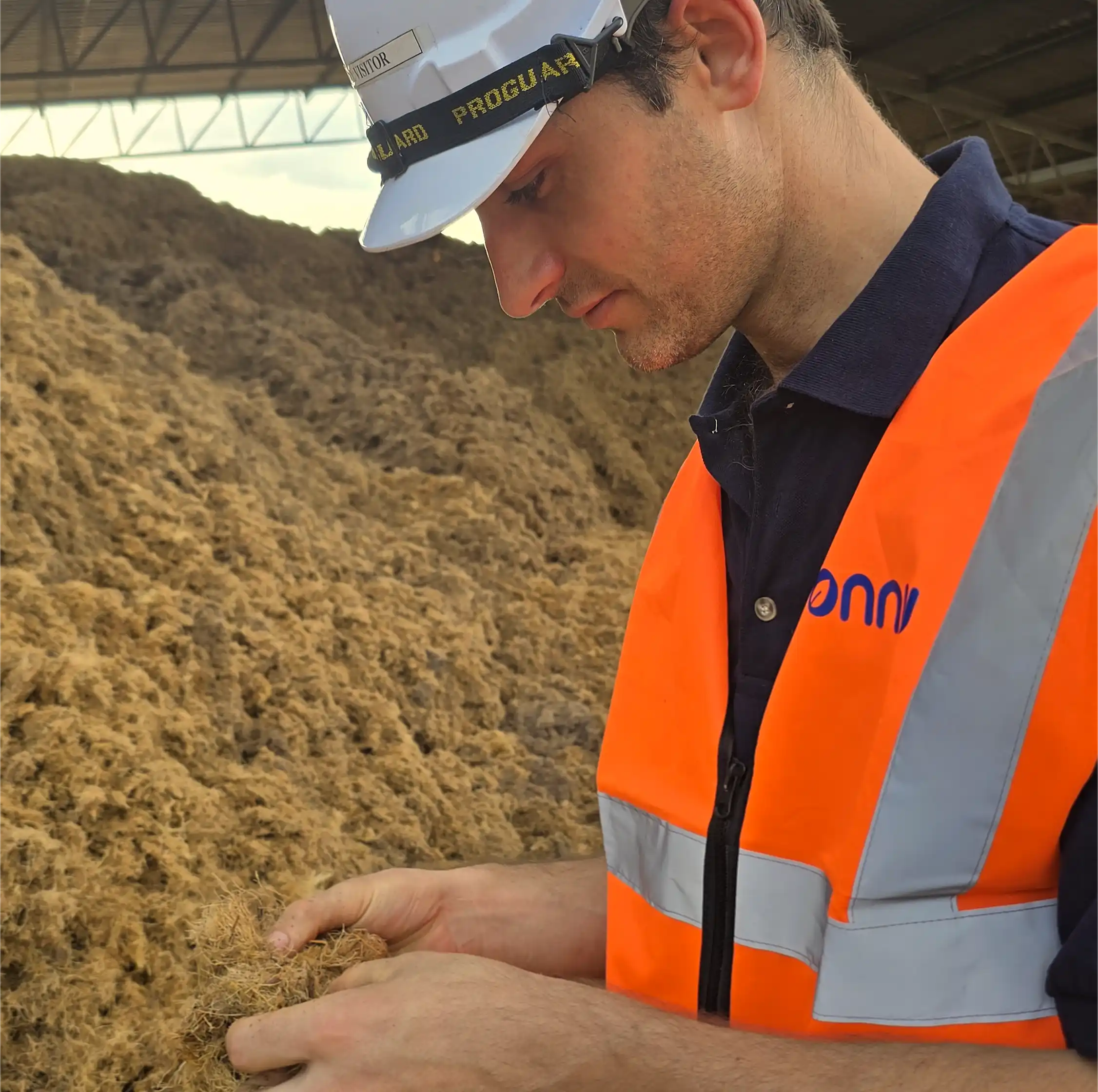
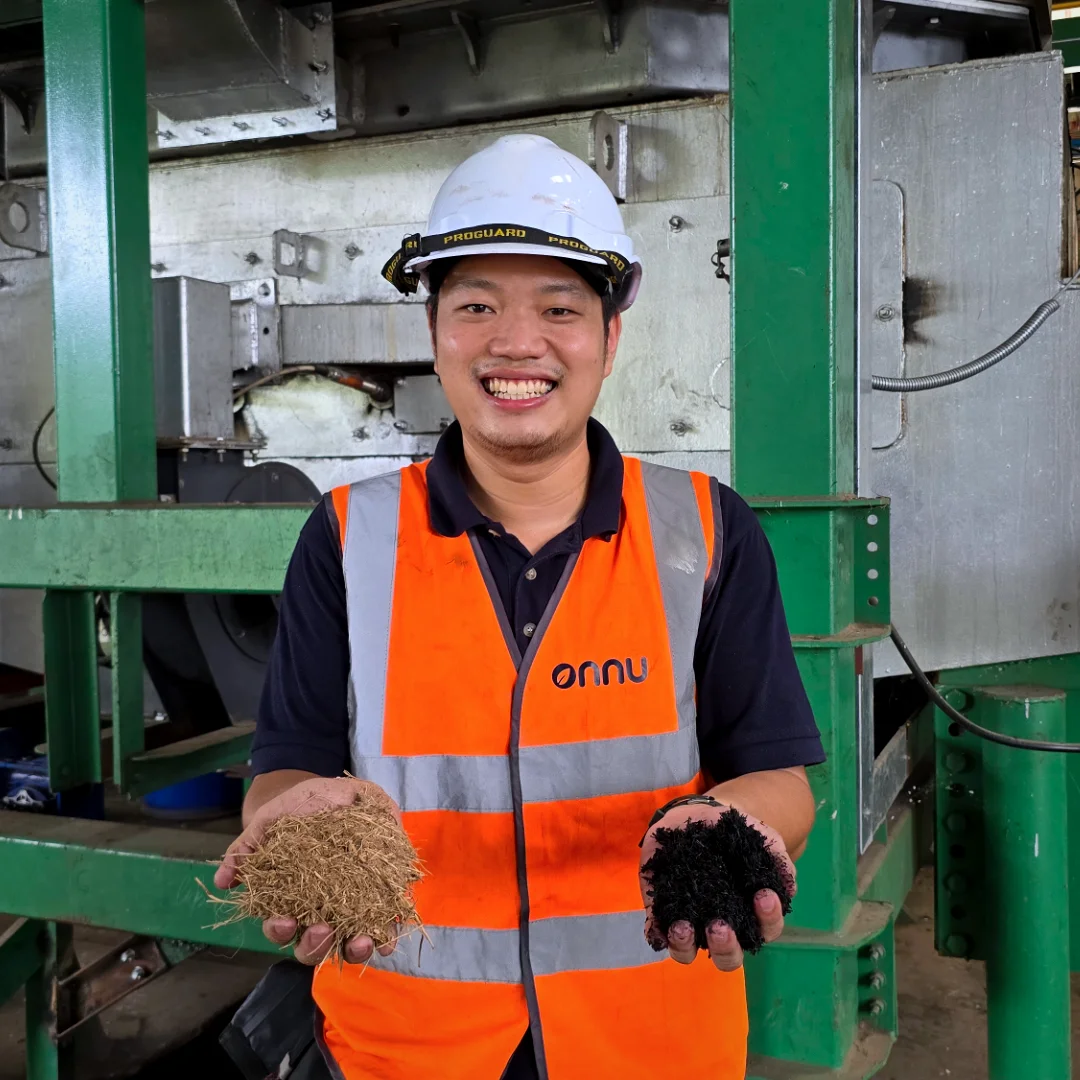
Our client is a biochar project developer that operates industrial pyrolysis plants, converting biomass feedstock; oil palm trunk, empty fruit bunches, and others, into biochar. Each plant streams live PLC data across roughly 155 sensor registers: temperatures, motor currents and speeds, gas and pressure, flow, and alarms.
No structured way to prove a run met MRV requirements
Machine telemetry and business/compliance data lived apart, with no structured way to prove a production run met MRV (Monitoring, Reporting, Verification) requirements.
No single connected record
Nothing connected what feedstock went into a run, how the reactor actually performed, and whether that run qualified for compliance or carbon claims.
QA that wasn't logged
Operator QA during a run was ad hoc rather than logged.
Alarms and tags nobody could read
Raw PLC alarm codes and sensor tags weren't decoded into anything a compliance report or operator could read directly.
Business data, siloed from the run
Feedstock, lab result, customer, and site data lived separately from the run data they related to.
A connected platform, built around MRV
[One or two lines introducing the tool — to be completed]
- Live telemetry, tied to the businessLive PLC data is ingested through Node-RED into a REST API, with sensor tags mapped to human-readable names, units and scale factors — then tied to each run's feedstock, customer, site and lab data.
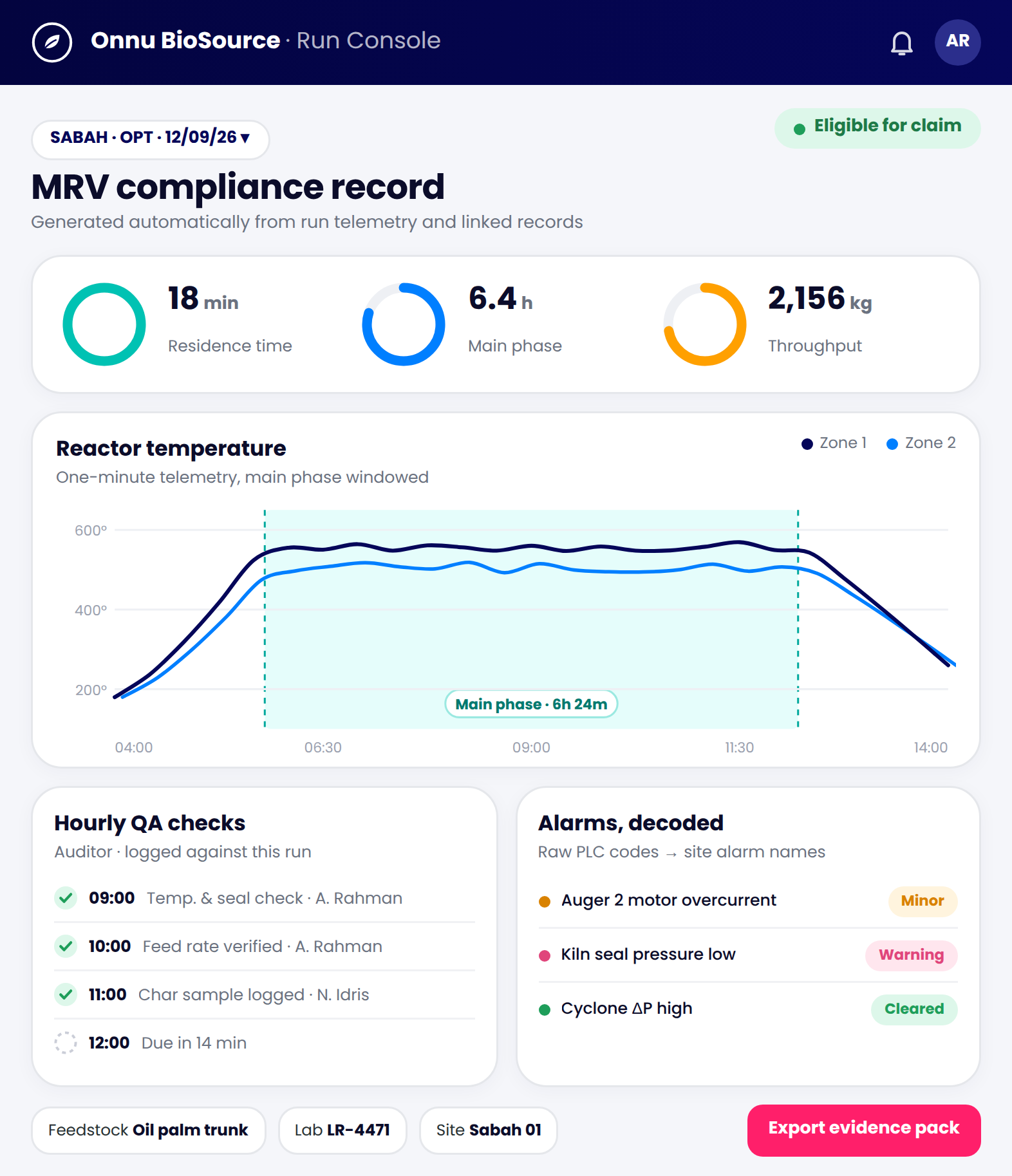
- A structured compliance record, per runAn MRV module generates a structured compliance record for every run: residence time, main-phase windowing, machine configuration and one-minute telemetry — evidence for a claim without manual reconstruction.
- QA and alarms, made auditableAn Auditor module logs hourly operator checks against each run, and raw PLC alarm codes are decoded into human-readable, per-site alarm names — turning QA into an auditable record.
One connected system, not reassembled by hand
Machine telemetry, compliance data, and business/feedstock data now sit in one connected system:
Book a free opportunity review.
A focused conversation about how your business runs and where AI could help — and where it would not.