BioSource dMRV
Streamlined compliance for quicker carbon credit turnarounds
4 hrsreport compiling saved each week
Explore case study
A focused conversation about how your business runs and where AI could help — and where it would not.
Book a free review →Every enquiry used to need an engineer before anyone knew if it was worth having. Now prospects size their own plant, ask questions about their own numbers, and arrive scored.

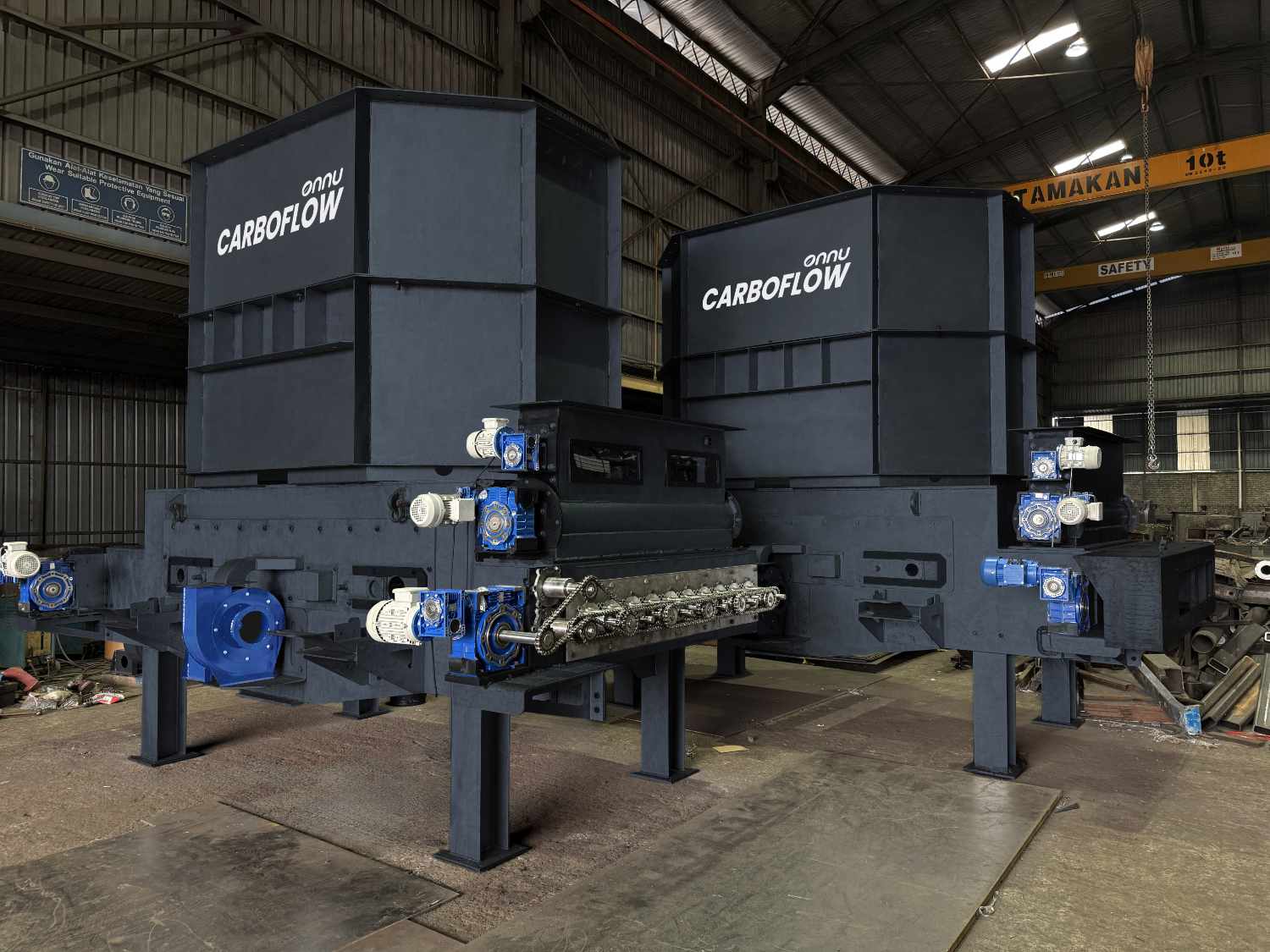
Onnu Engineering builds and sells CarboFlow, a pyrolysis technology that converts biomass into biochar, carbon credits and recoverable heat. Its customers are prospective plant operators: landowners, agribusinesses, waste handlers and consultants who want to build a biochar plant and need specific answers on cost, technology and production before they can take a project forward. Those answers are not generic. They depend on the feedstock, the site, the energy the operator wants back and how the project is financed. Every one of them used to be worked out by hand.
Every serious enquiry, “what would a CarboFlow plant cost and return for my feedstock and site?”, required manual engineering and sales effort: feedstock analysis, building a CAPEX estimate, and modelling a P&L, all before anyone knew whether the lead was even qualified. Spreadsheet-based versions of this work existed, but each one had to be run and interpreted by an engineer for every prospect individually.
Even exploratory prospects, many of whom would never convert, consumed engineering time before anyone could tell whether the lead was worth having.
A prospect could not get a rough but credible number without first getting on a call, which capped how many leads the business could engage with at once.
Once a lead did arrive, judging it meant reading the submission and deciding. Different people weighted feedstock volume, site readiness and financing differently, and none of it was written down.
A lead was either followed up or it was not. Nobody could ask why one looked stronger than another, or what was missing from it, without going back through the whole submission by hand.
A guided, eight-step flow takes a prospect from “about you” to a sized plant in one sitting. Each answer updates the live project summary above the form, so they watch the plant take shape as they go.
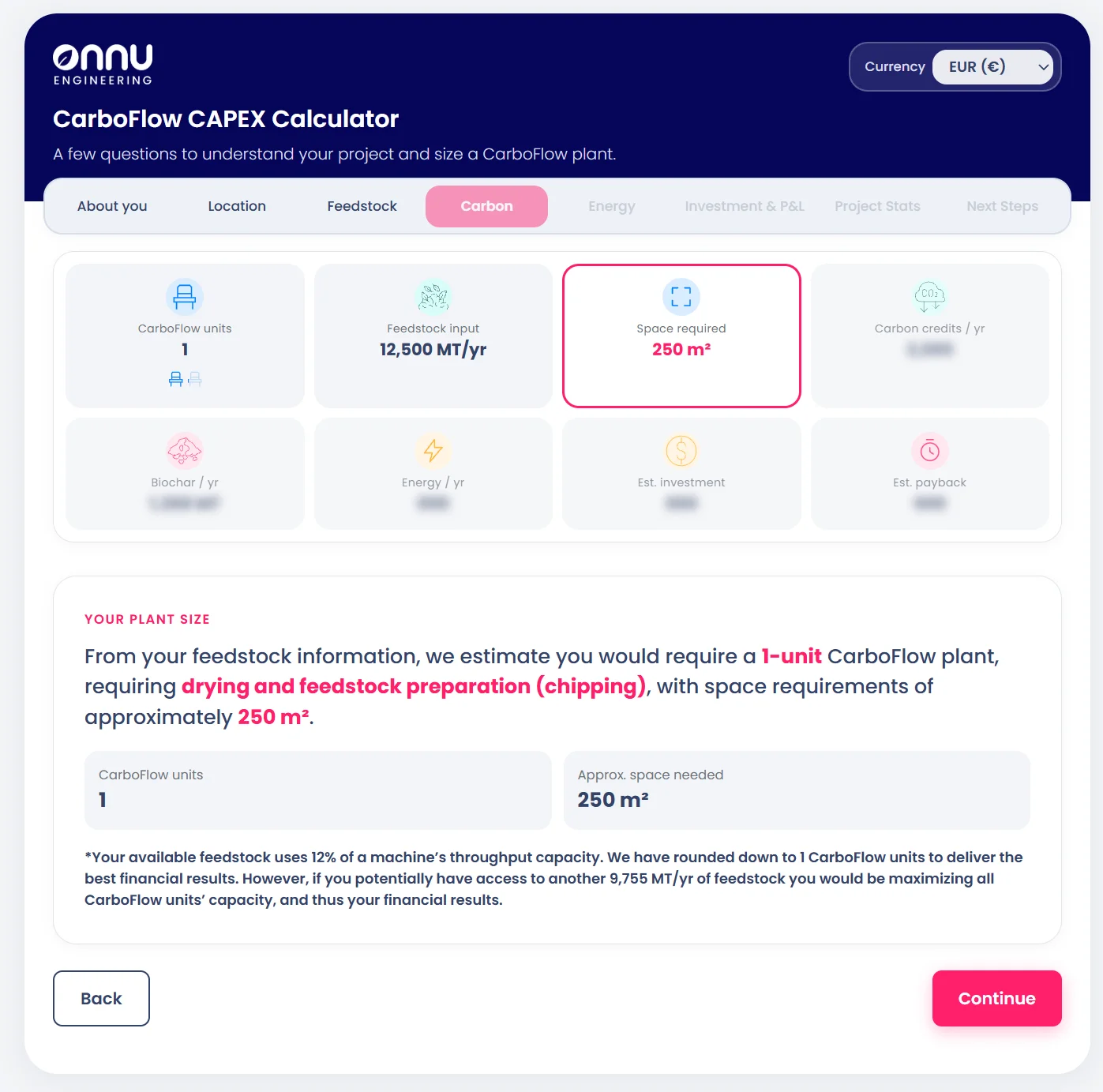
Plant size, unit count and footprint are computed from feedstock alone, before any contact details are asked for.
Feedstock type, site location, heat use and currency all feed the model. Choose on-site hot water and power generation drops out; change feedstock and the plant resizes. Every prospect gets a plan for their project, not a brochure figure.
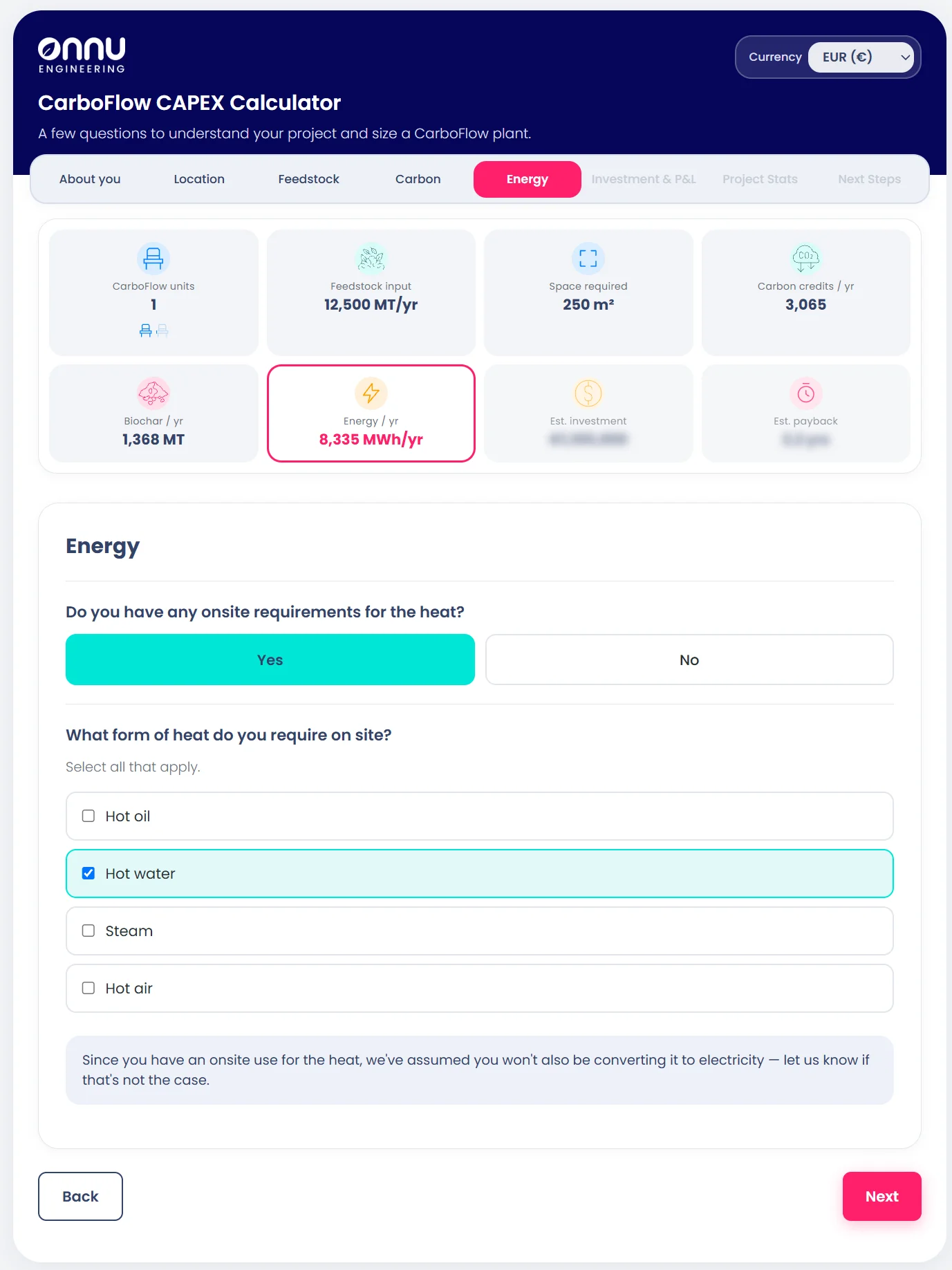
Heat choices reshape the model live: selecting on-site hot water removes power generation and reprices the plant.
The results page states the units required, CAPEX, a full P&L, payback, mass-energy balance and plant specification. Every assumption is a slider with a reset, and prospects can ask about any of it in plain language, getting answers drawn from their own run and the model’s assumptions, with the chat saying plainly when something needs an engineer.
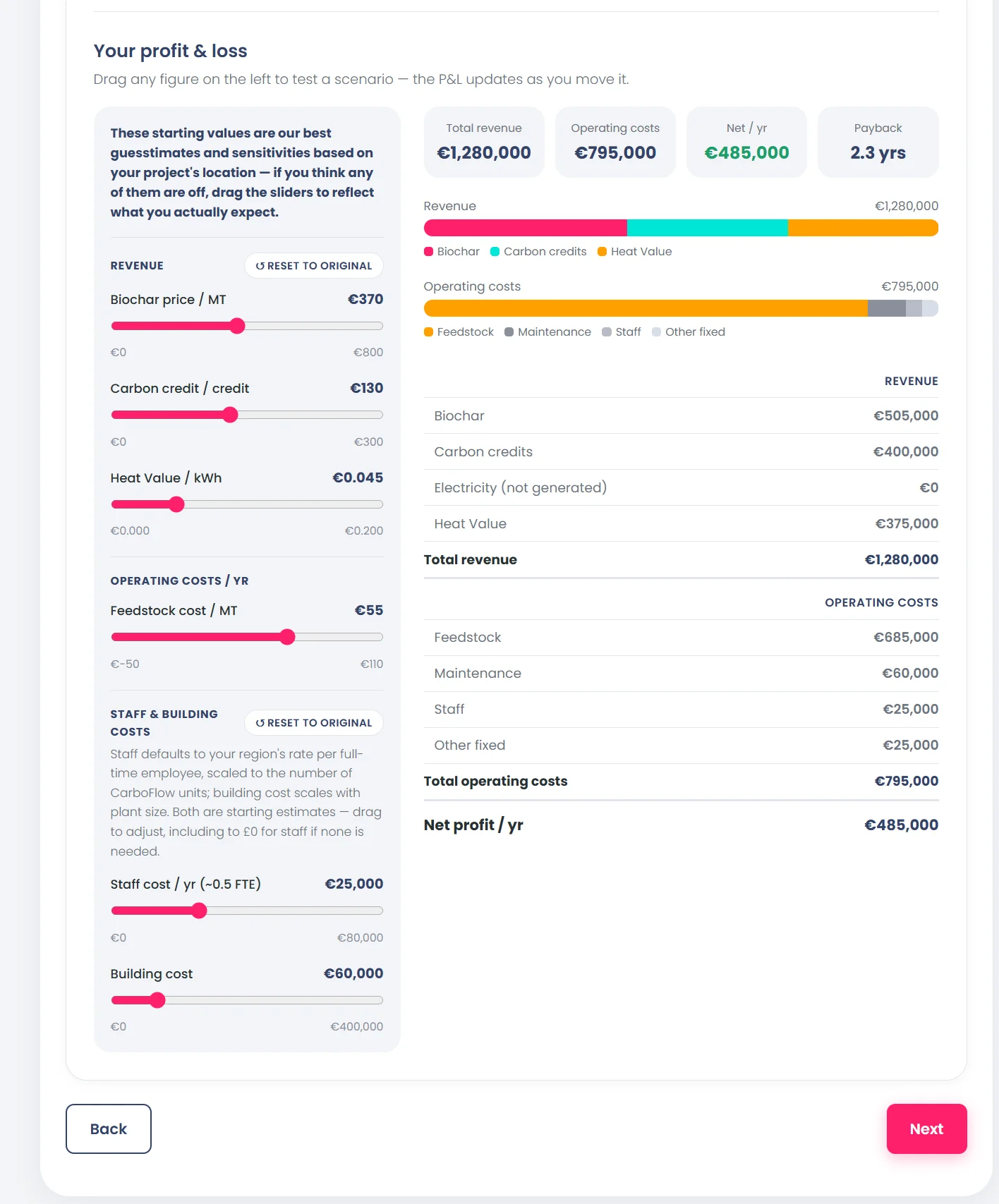
Every assumption is a slider, so prospects stress-test their own P&L instead of waiting on an engineer.
Every run lands in Onnu Engineering’s dashboard scored out of 100, with the factors that lifted or held it back shown alongside. The sales team can question any score directly, asking what is weak, what is missing and what to raise on the first call. Figures are recomputed server-side, and partial runs are kept and scored on what was completed.
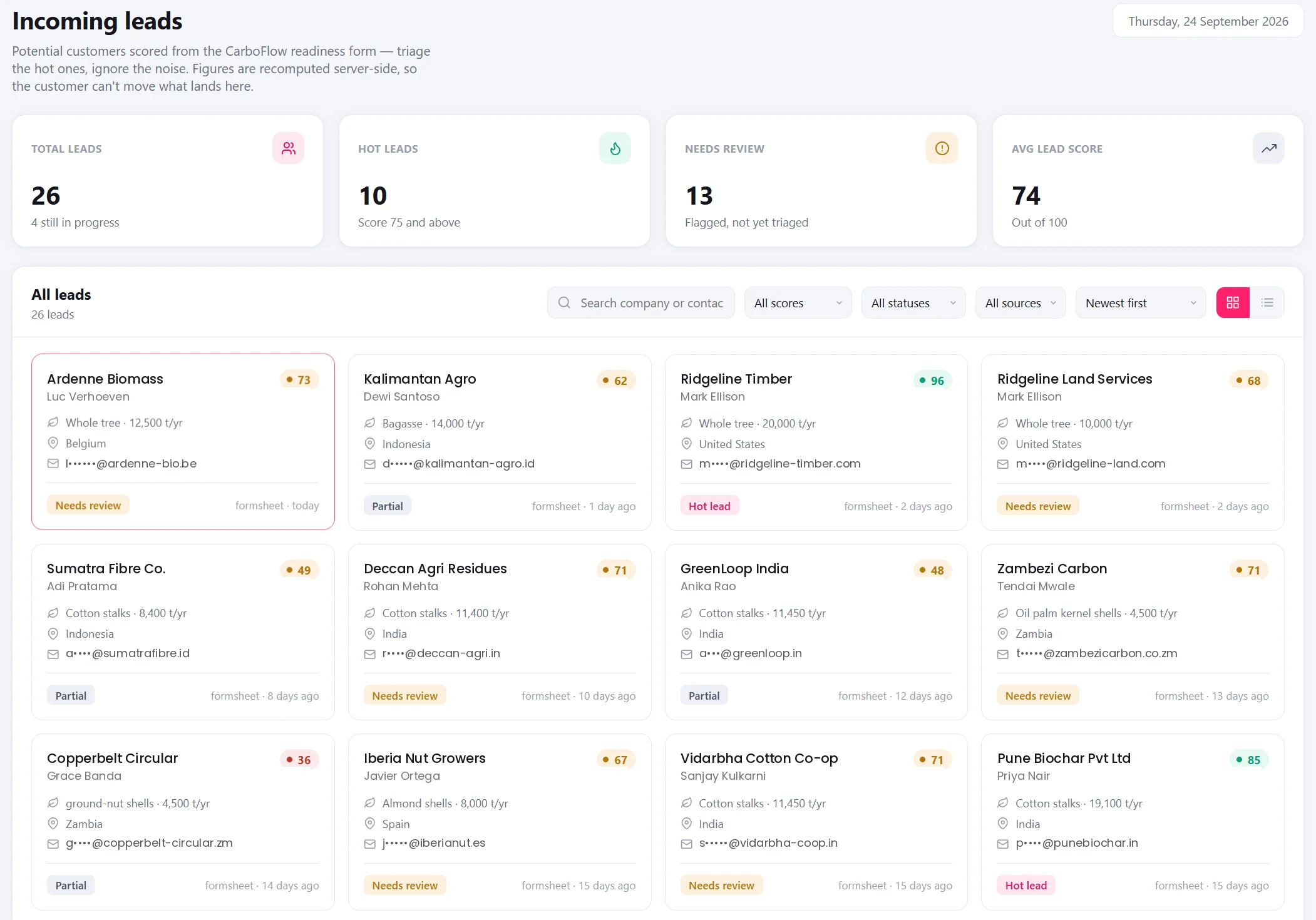
Every submission is scored server-side and triaged. Partial, abandoned runs still land as leads.
The Project Assessment Tool changed how Onnu Engineering's pipeline runs, and what the team knows about a lead before they pick up the phone:
Tell us about the process or manual check that is slowing you down. We will tell you plainly whether AI is the right answer.
Get in touch

A focused conversation about how your business runs and where AI could help — and where it would not.