BioSource dMRV
Streamlined compliance for quicker carbon credit turnarounds
4 hrsreport compiling saved each week
Explore case study
A focused conversation about how your business runs and where AI could help — and where it would not.
Book a free review →Using cameras and image recognition to take away tedious human monitoring, freeing-up staff for higher value tasks.
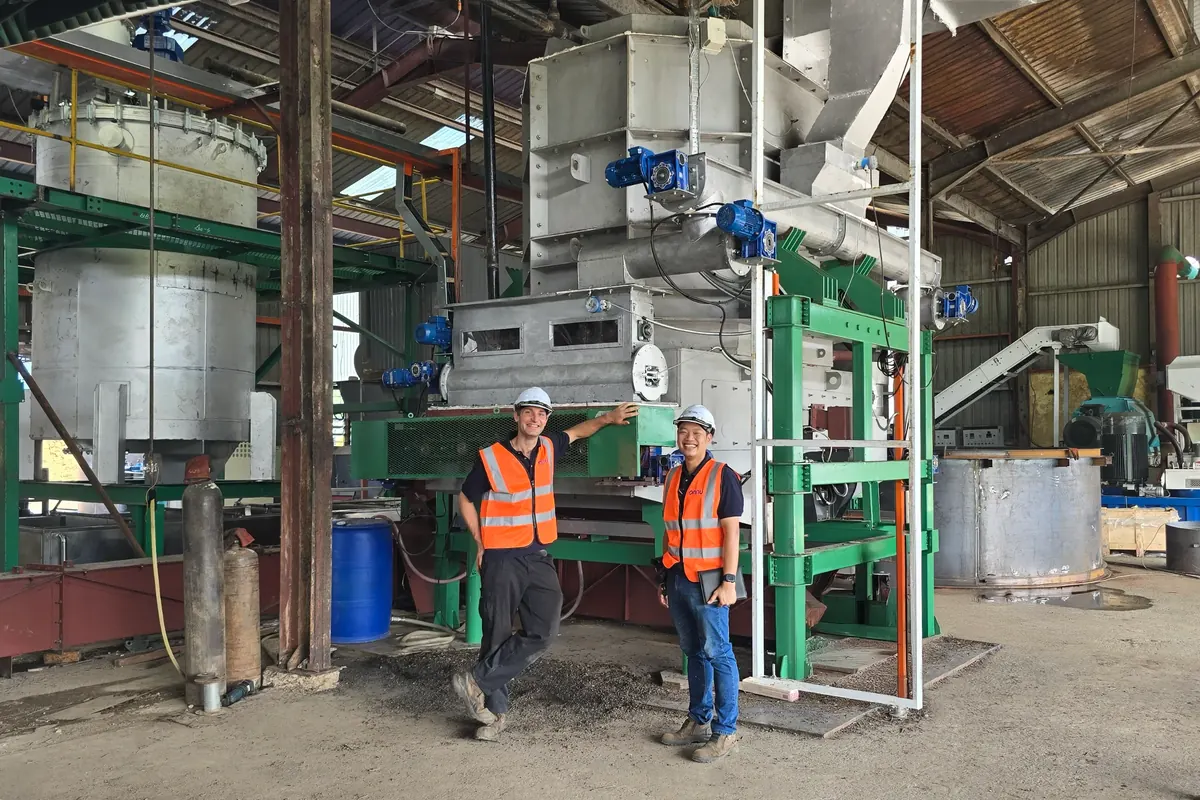
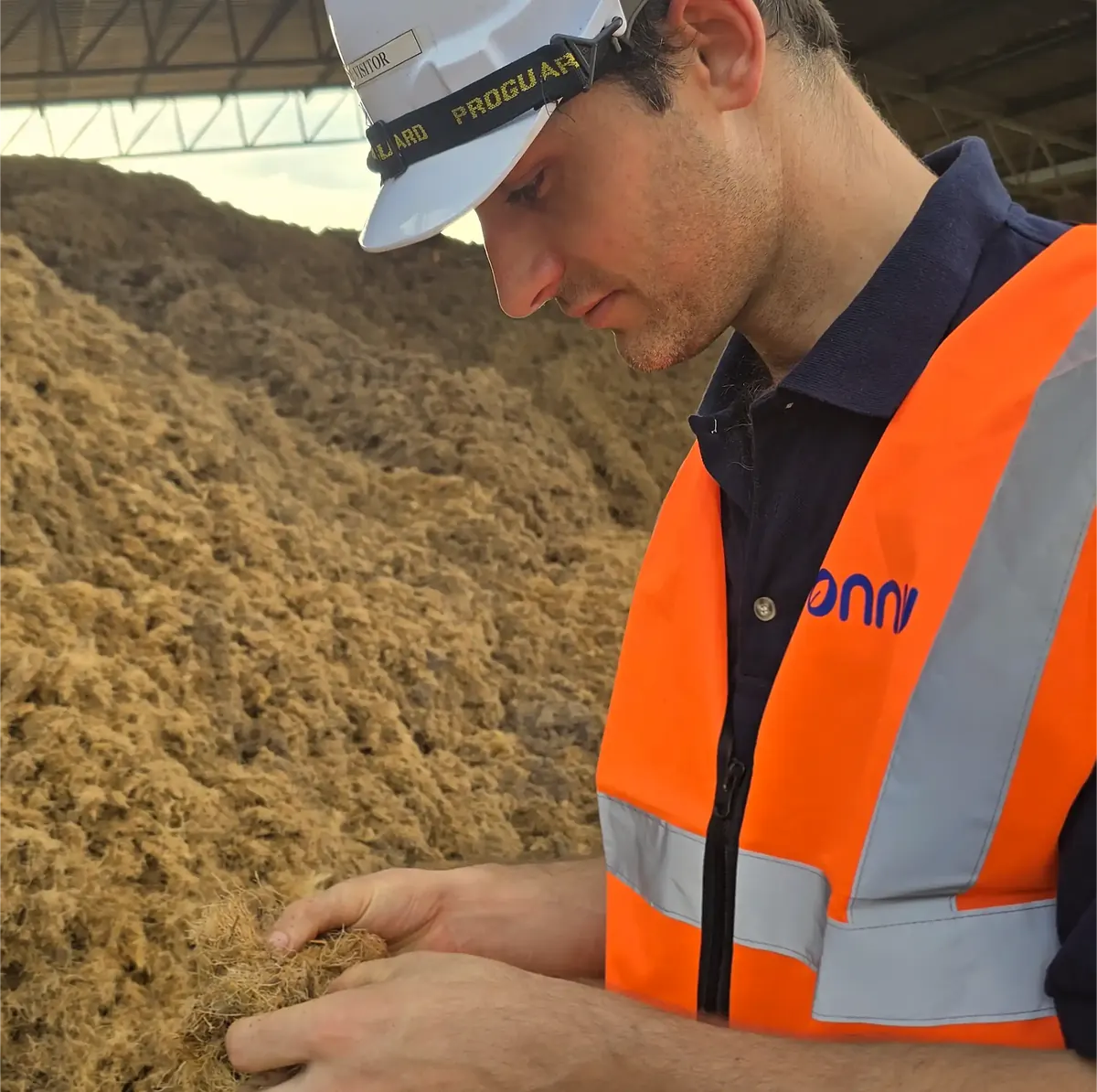
Aumkar Plantations in Malaysia operate a 24/7 pyrolysis process, taking agricultural residues and converting them into carbon removals, biochar and green energy. The operation is large and requires multiple pieces of equipment to work in unison to optimise outputs. Previously, level sensors were relied upon to monitor throughputs, but reactions to issues were too slow, resulting in interruptions to production.
Keeping each rotary valve correctly filled is critical to smooth, continuous operation. Too little feedstock underfills the valve, too much overfills it, and either state requires a fill-time correction on the augers. Historically, this has relied entirely on manual visual inspection: an operator watches a live camera feed above each valve, classifies what they see into one of six fill states every 90 seconds, and manually adjusts auger fill time in small ±2 second increments.
The manual process ties up one operator continuously monitoring two camera feeds, on a line that never stops.
Classifying fill state by eye, every 90 seconds, introduces the possibility of inconsistent or fatigued judgement calls.
Relying on manual monitoring slows Aumkar's ability to scale the operation to more equipment and more sites.
No new hardware went in. The overhead camera above each rotary valve, the same feed an operator used to keep an eye on, became the model’s only input. Every capture is timestamped at source, so each read can be traced back to the exact frame it came from.
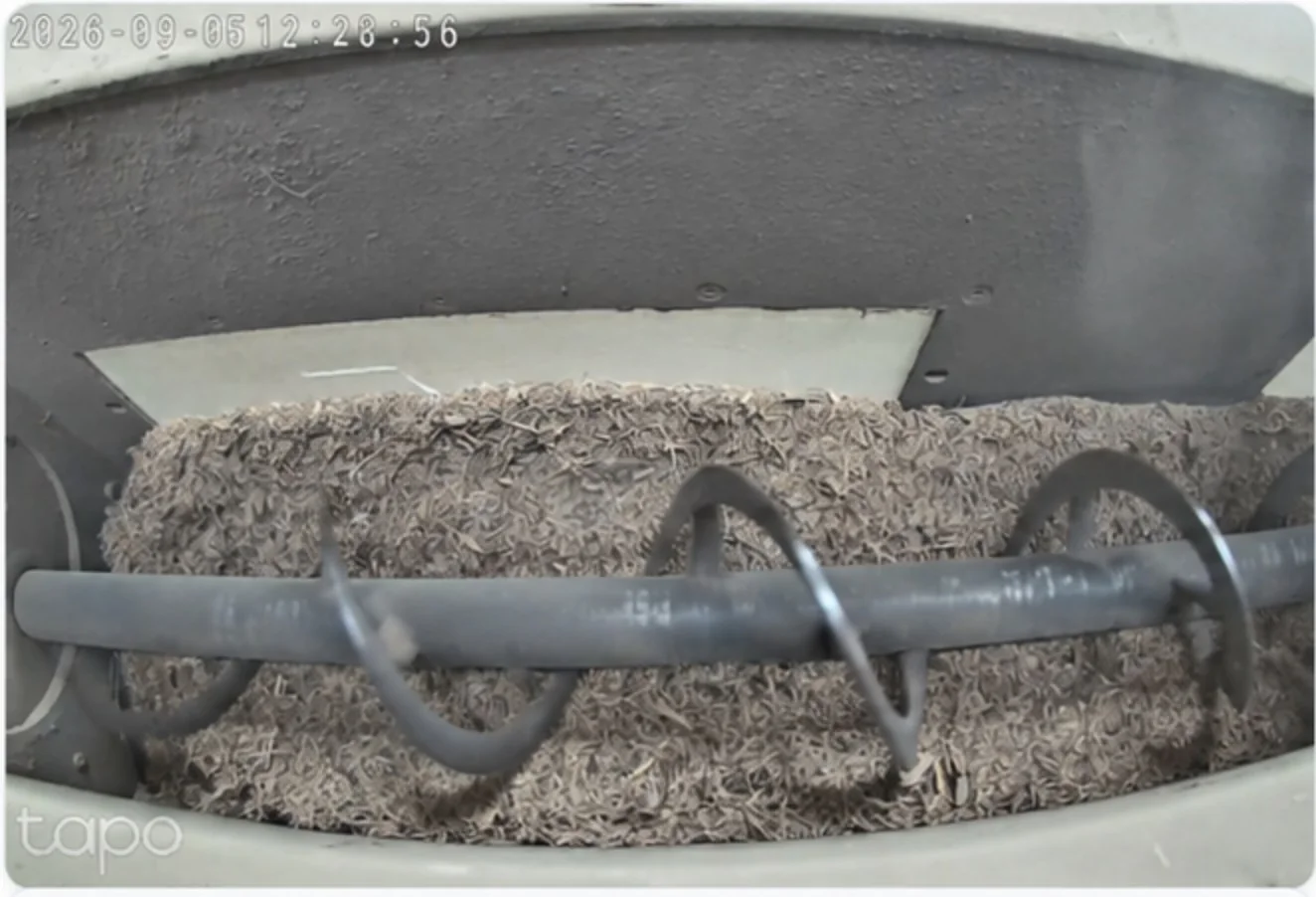
The raw hopper feed: what an operator used to watch by eye, all shift.
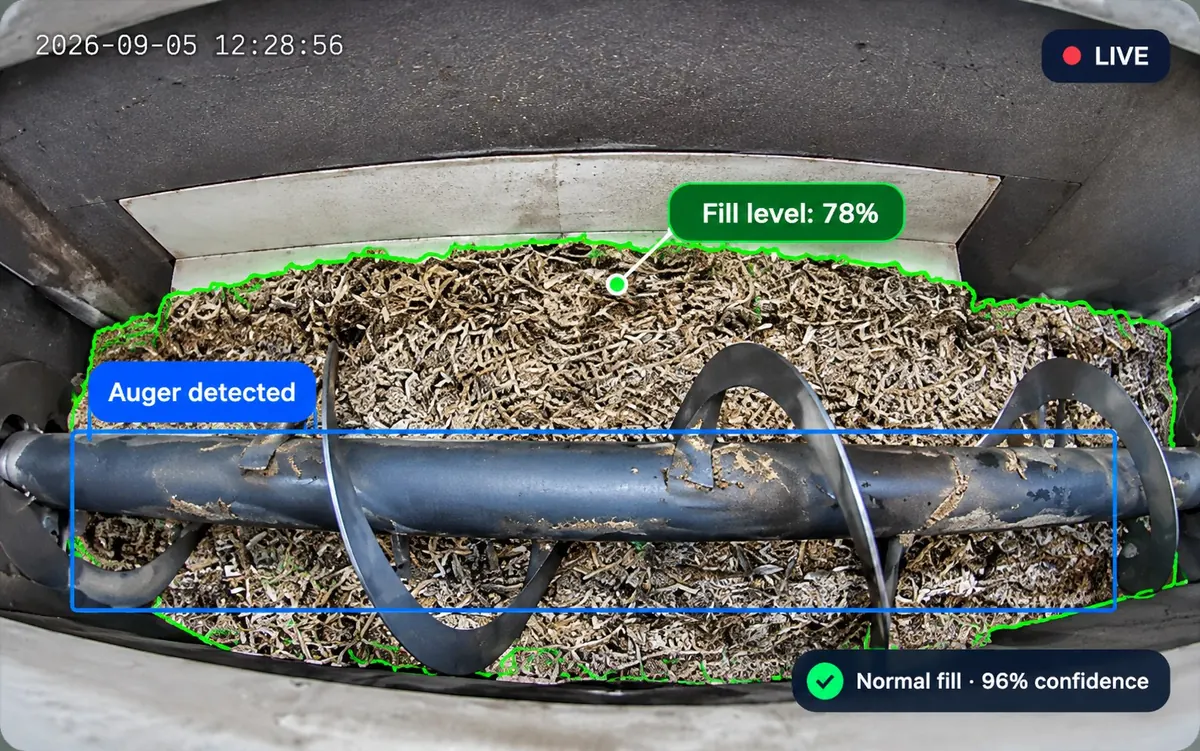
The model outlines the material, detects the auger, and returns a fill level and a class with a confidence score on every read. It is the same judgement an operator made, now made on a fixed cycle and passed straight to the PLC.
Normal fill at 78%, called with 96% confidence, without anyone watching the screen.
Before anything trains the model, each image is annotated and reviewed: fuel level, auger, feed consistency, hopper structure and obstructions. Reviewers correct the labels, add notes, and only then send the image to training.
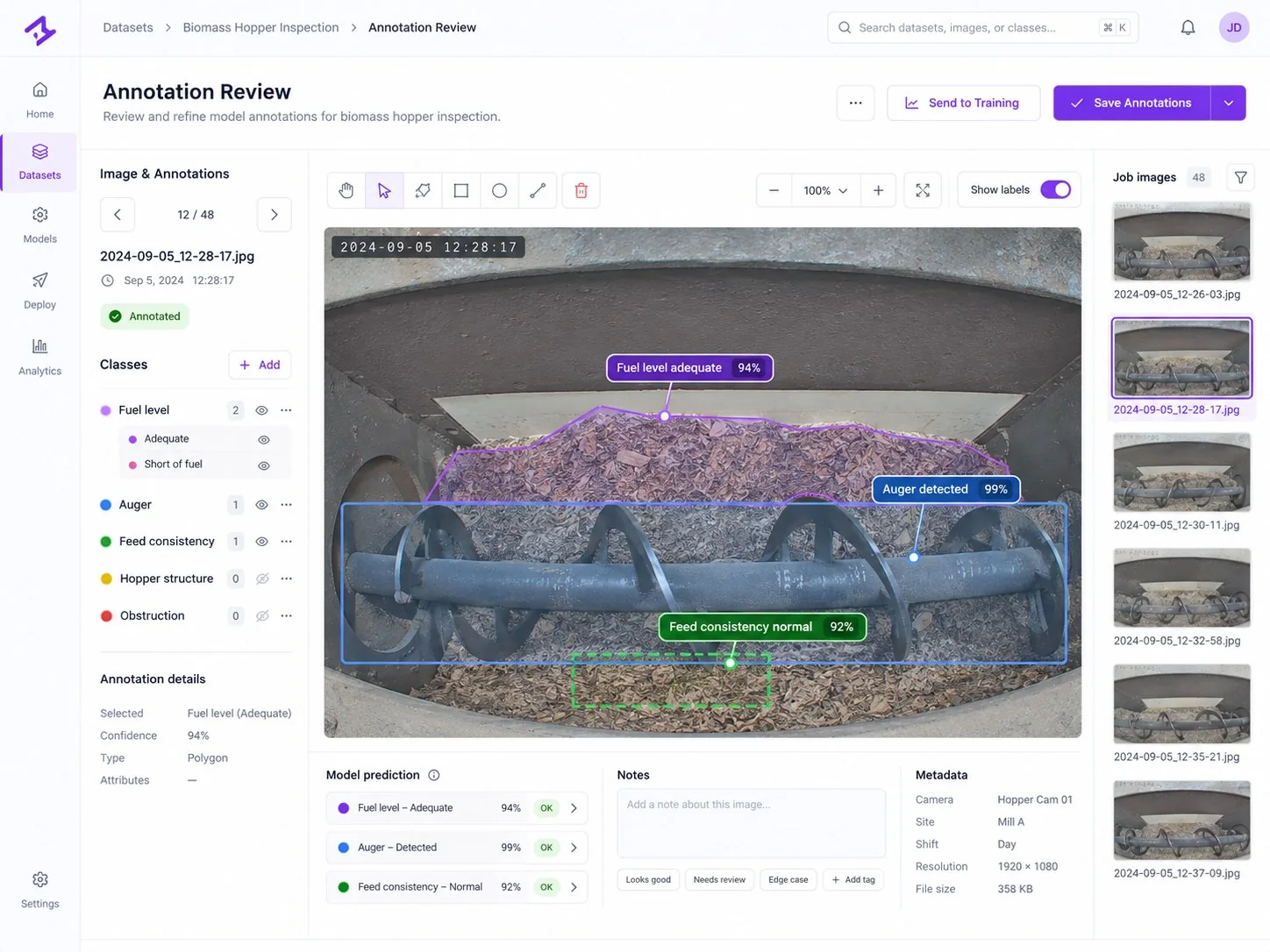
One review job of 48 hopper images, each labelled and checked before it is used.
Each model is tested on images it has not seen, with accuracy, precision, recall and F1 reported for every fill state rather than as one headline number. The weakest classes stay visible, so the team knows where more examples are needed.
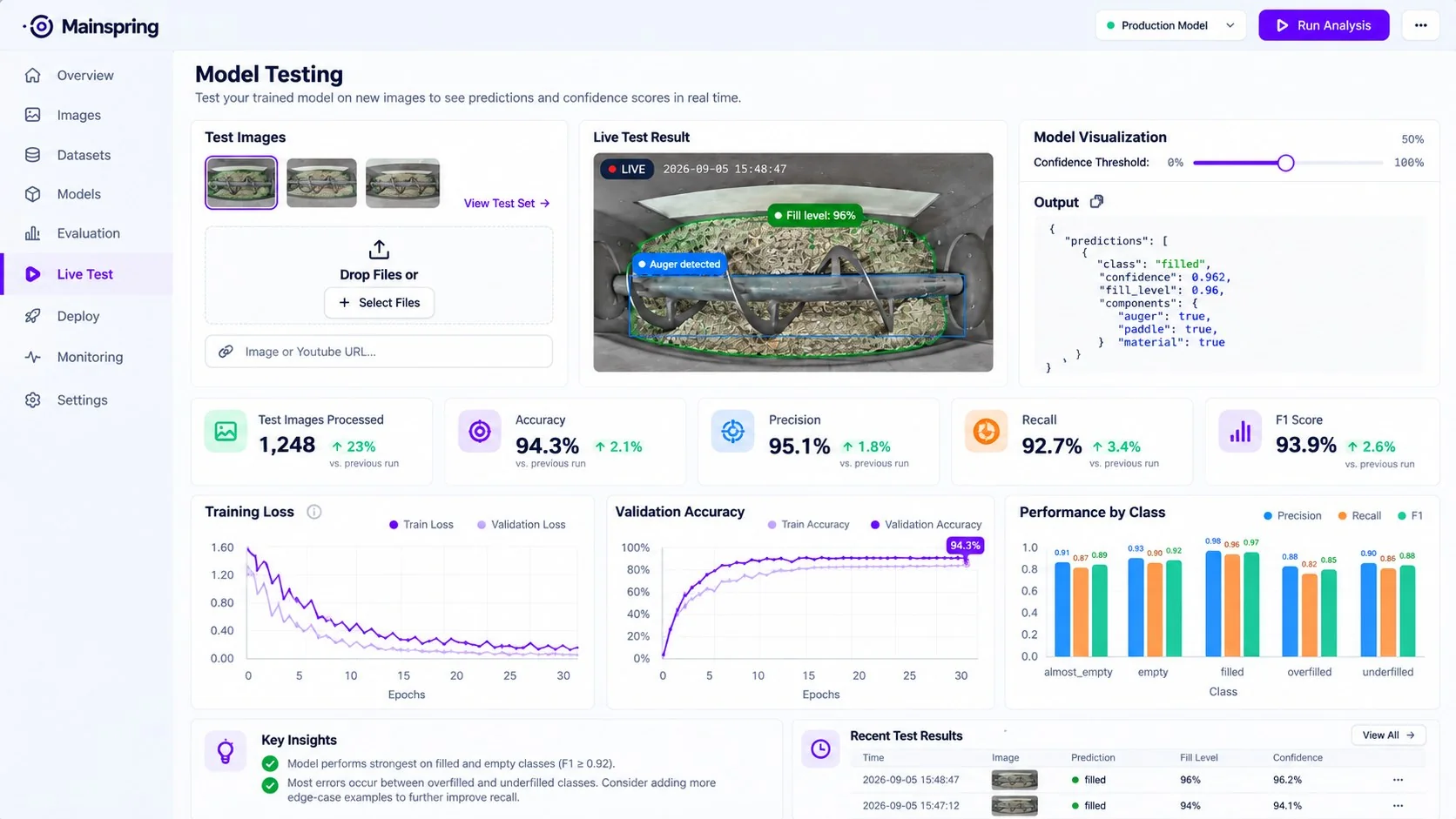
Strongest on filled and empty; most errors sit between overfilled and underfilled.
Following full deployment across both rotary valves and integration with the PLC, the manual visual monitoring process has been replaced with automated, real-time fill-state classification driving auger adjustments directly.
Tell us about the process or manual check that is slowing you down. We will tell you plainly whether AI is the right answer.
Get in touch

A focused conversation about how your business runs and where AI could help — and where it would not.